
For today’s blog I'm joined by Zeke (Twitter: @knockemdownes, Instagram: @freshshirtsuk) who takes a look at the evolution of football kit manufacturers.
The 1990s are widely considered the golden era for football shirts. Iconic players wore iconic kits with unforgettable sponsors. But something that doesn’t get talked about as much is the manufacturers themselves.
Which brands dominated the market? Which disappeared? And how did the modern duopoly of Nike and Adidas come to dominate world football?
Let’s dive into the evolution of football shirt manufacturers.
Premier League Kit Manufacturers
Today we’re used to seeing Nike and Adidas dominate football shirts across the world. But it wasn’t always like this.
During the inaugural Premier League season in 1992–93, Nike wasn’t present at all.
Of the 20 clubs in the league:
- 11 teams wore Umbro kits
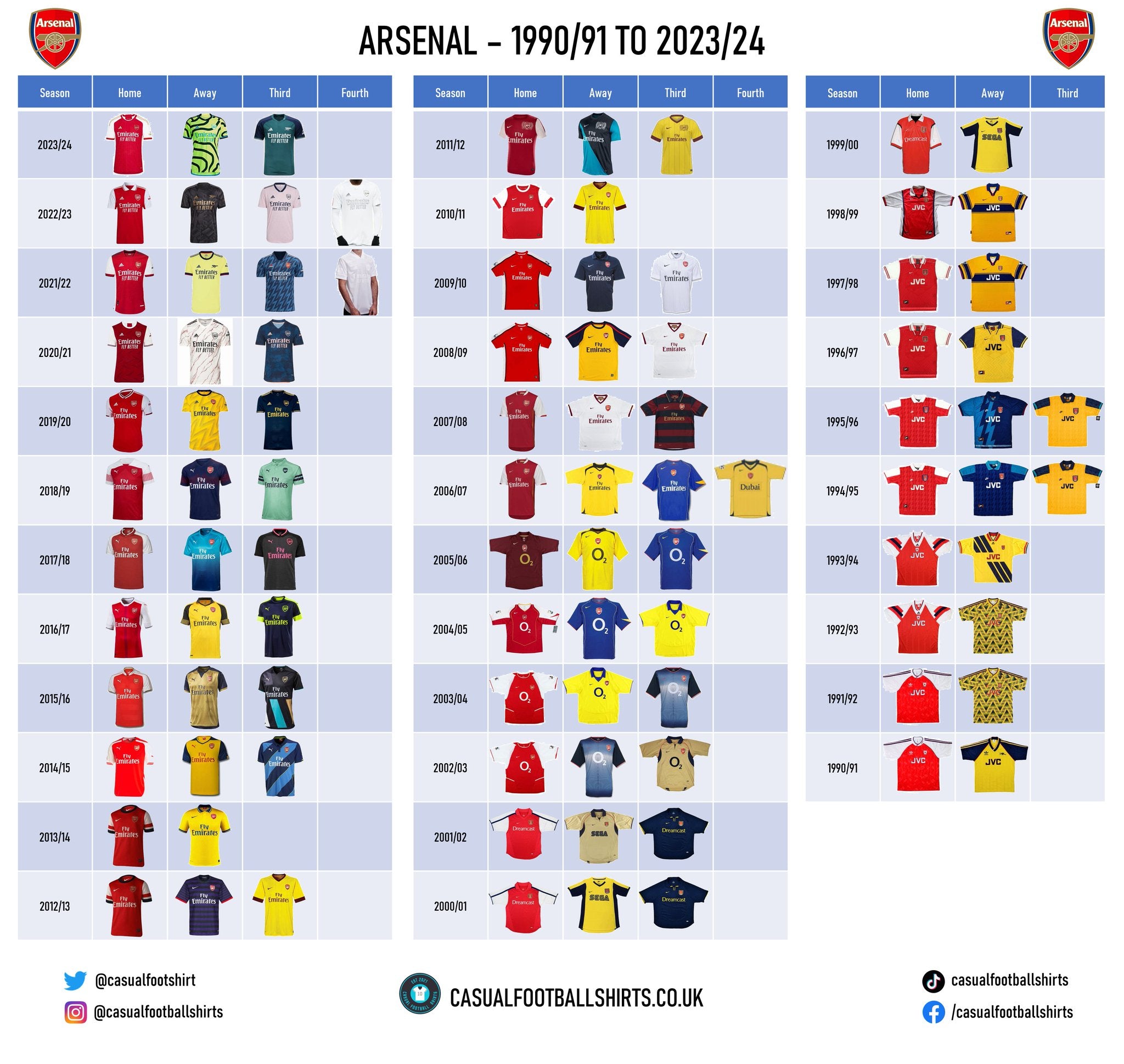
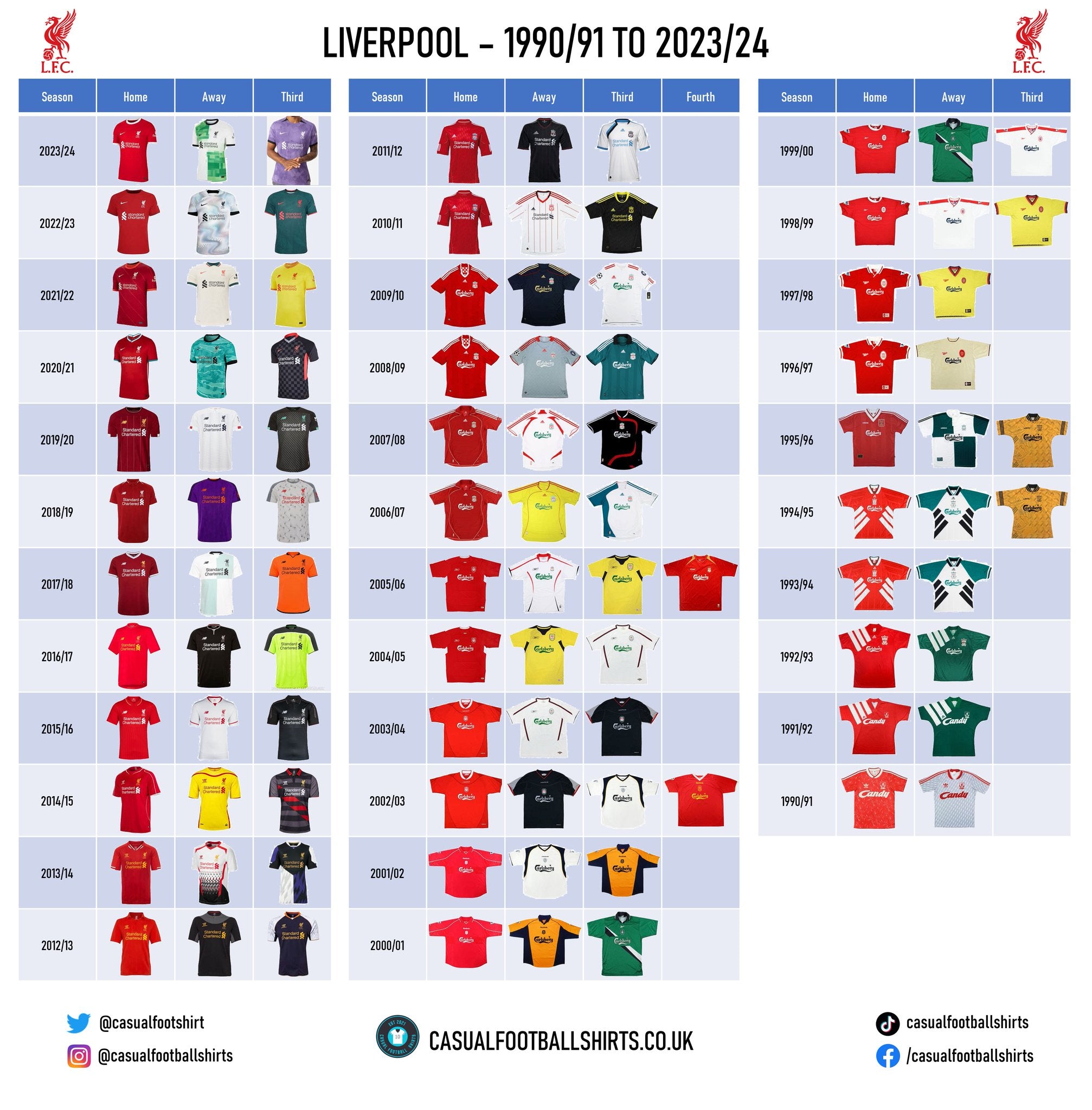
- Adidas supplied Arsenal and Liverpool
- ASICS, Ribero, Admiral and Brooks Running made up the remaining manufacturers
Many of these companies have since disappeared or stopped producing football shirts. However, they played a huge role in creating some of the most iconic kits in football history.
Compare that to the 2022/23 Premier League season:
- Adidas – 5 clubs
- Nike – 4 clubs
- Castore – 3 clubs
- Umbro – 3 clubs
- Hummel – 2 clubs
- Macron – 2 clubs
- Puma – 1 club
While the Premier League itself still has some variety, across Europe’s top leagues Nike and Adidas dominate the market.
Bundesliga Manufacturers
The Bundesliga in the 1990s looked quite different compared with the Premier League.
During the early part of the decade there was a range of manufacturers, but towards the end of the 1990s Adidas became the most widely used supplier.
This was reflected by the German national team also wearing Adidas.
Other manufacturers included:
- Puma – FC Köln and Eintracht Frankfurt
- Nike – Borussia Dortmund and 1860 Munich
- Umbro – Fortuna Düsseldorf
Meanwhile Adidas supplied clubs such as Bayern Munich, Bayer Leverkusen, Stuttgart and Nürnberg.
Some clubs had interesting manufacturer histories too. Wolfsburg briefly switched from Adidas to Reusch during the 1990s.
Schalke famously partnered with Adidas from 1977 all the way until 2018 — a relationship rarely seen in modern football.
My Bundesliga soft spot, Borussia Mönchengladbach, moved from Puma to ASICS and then to Reebok, producing some fantastic kits during that period.
Here is a classic ASICS example — the Borussia Mönchengladbach 1994/95 home shirt.

Brands like Diadora and Lotto also appeared occasionally, but Adidas and Puma were the dominant manufacturers in German football during the 1990s.
Serie A Manufacturers
Italian football in the 1990s was incredibly popular, particularly in the UK after Channel 4 began broadcasting Serie A matches in 1992.
At the same time Sky launched the Premier League, paying £304 million for broadcasting rights — compared to just £1.5 million for Serie A.
Because of this exposure, Italian football shirts became extremely desirable among collectors.
Many iconic manufacturers appeared in Serie A during the decade:
- Lotto and Champion – Parma
- Fila – Fiorentina
- Kappa – Juventus
These shirts are instantly associated with legendary players such as Crespo, Batistuta and Del Piero.
The Milan clubs took a slightly different approach. AC Milan worked primarily with Adidas, briefly switched to Lotto, and then returned to Adidas again. Inter Milan moved from Umbro to Nike.
Italian football dominated Europe during this era. Astonishingly, an Italian club appeared in every Champions League final from 1992 to 1998.
La Liga Manufacturers
Spain also relied heavily on domestic manufacturers in the early 1990s.
Kelme supplied Real Madrid and Valladolid, while rivals Barcelona and Athletic Bilbao wore Kappa kits.
Puma produced shirts for Atlético Madrid, Tenerife and Espanyol, while Umbro supplied Deportivo, Sevilla and Celta Vigo.
Smaller brands such as Luanvi and Astore also appeared across La Liga.
By the late 1990s, Nike and Adidas entered the league in a big way.
- Nike signed Barcelona
- Adidas partnered with Real Madrid
Atlético Madrid briefly worked with Reebok before Adidas and Umbro expanded their presence in Spain.
Today Nike and Adidas supply around eight of the twenty La Liga clubs, while the remaining teams are spread across a range of manufacturers.
Despite their dominance, some classic brands are beginning to reappear, including Matchwinner, Meyba and Patrick.
International Football Manufacturers
International football followed a similar pattern to club football.
During the early 1990s Adidas dominated international kits, supplying countries including Germany, France, Portugal and Spain.
Later in the decade Nike expanded rapidly, signing teams such as:
- Brazil
- Italy
- Portugal
- USA
- Belgium
- Nigeria
- South Korea
One interesting story involved the Netherlands. They started the decade wearing Adidas, switched to Lotto, and finished the 1990s with Nike.
Templates became increasingly important during this era.
The famous Adidas 1996 template appeared on the shirts of Sweden, Turkey, France, Germany and Spain.
Nike’s 1998–2000 template was also hugely influential, appearing on teams such as Brazil, Arsenal, Dortmund, Portugal and Inter Milan.
Denmark’s Hummel kit during Euro 1992 also became legendary.
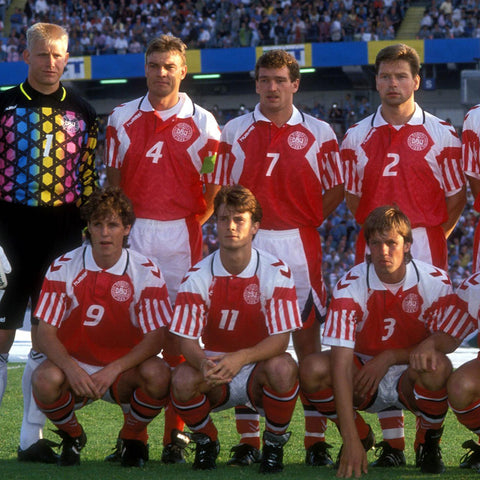
Denmark famously entered Euro 1992 only days before the tournament after Yugoslavia were disqualified — and went on to win the entire competition.
This created a lasting affection among collectors for Hummel kits.
Today the situation looks very similar. At the 2022 World Cup:
- 13 teams wore Nike
- 7 teams wore Adidas
- 6 teams wore Puma
The remaining countries were spread across a small number of other manufacturers.
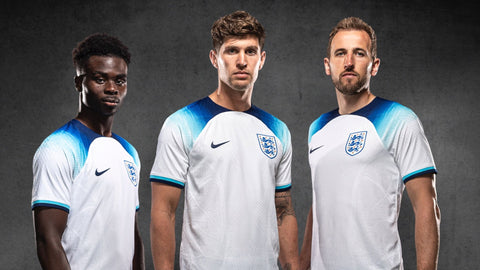
It will be interesting to see whether future tournaments bring more diversity among kit manufacturers — but for now, Nike and Adidas continue to dominate world football.